
Any trusted online gaming platform that operates in Finland or accepts Finnish players demands a valid licence from a acknowledged regulatory authority. That licence isn’t just a digital certificate hidden in a website footer. It’s a enforceable legal framework that governs how player funds get handled, how games are tested for fairness, and what takes place when a dispute arises. For a platform like BoaBoa Kasino Casino, partnering with a top-tier licensing body shows a commitment to transparency that is not merely marketing talk. Finnish players who comprehend how these regulatory watchdogs work can make much more informed choices about where they place their money. The gap between a stringent licence and a weak one often defines the entire player experience.

The Core Mandate of a Trusted Regulator
A great licensing body goes beyond collecting application fees and granting permits. Its core mandate is founded on three non-negotiable pillars: consumer protection, game integrity, and preventing criminal activity. At its best, a regulator acts as a silent guardian. It audits the random number generators behind every slot spin and checks that the advertised return to player percentages actually hold up under lab conditions. Finnish players, who tend to be highly digitally literate, anticipate this kind of technical scrutiny as a given. The regulator also implements strict anti-money laundering rules that require thorough identity checks. So when a player uploads their ID to BoaBoa Casino, they’re complying with a process required by serious legislation, not just some arbitrary company policy.
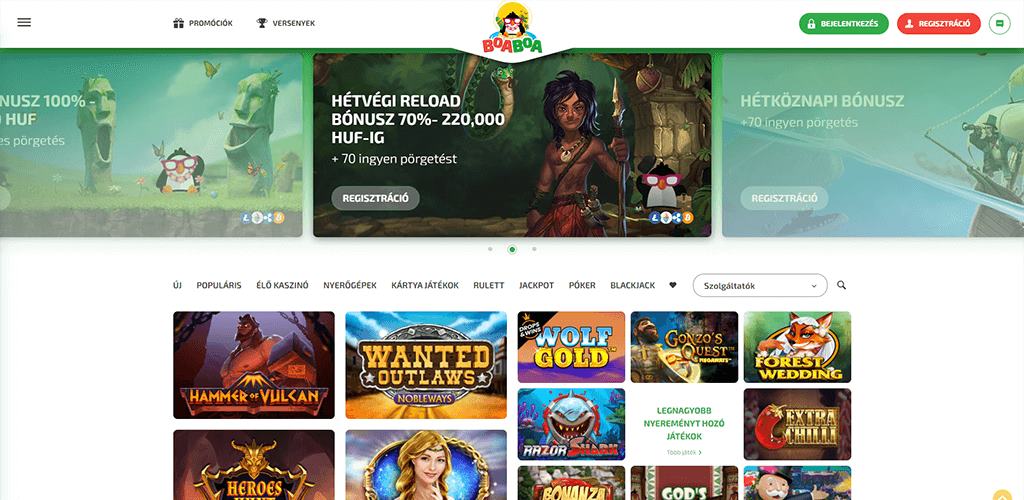
What separates a genuine authority from a paper tiger is enforcement power. A respected regulator can issue heavy fines, suspend licences on the spot, and report criminal conduct to law enforcement. They operate dedicated investigation teams that perform undercover mystery shopping to test compliance in real time. These teams check whether responsible gambling tools actually work, whether self-exclusion requests are handled immediately, and whether advertising meets the standards without misleading claims. The regulator’s technical auditing arm runs gaming software through millions of simulated rounds to spot statistical anomalies that might signal manipulation. Without that kind of enforcement muscle, a licence is just a decorative badge, not a meaningful safety guarantee for the player.
Problem Gambling Requirements That Carry Weight
A regulatory authority that truly cares about player welfare does not treat responsible gambling as a box-ticking exercise fulfilled by a single page of helpline numbers. It enforces a full set of mandatory tools that have to be integrated right into the player account interface. Deposit restrictions, loss restrictions, betting limits, and playtime limits should be customizable by the user, with instant reductions and a cooldown period for any raises. Reality check notifications must interrupt gameplay at customisable intervals, displaying net position and time elapsed. The regulator dictates the exact wording and frequency of these interventions, so the operator cannot simply hide them in submenus. These aren’t optional features a platform can highlight or bury depending on financial performance metrics.
The leading regulators now demand operators to implement automated detection systems that analyse player behaviour for warning signals. These systems monitor changes in deposit frequency, late-night session patterns, chasing losses, and the employment of multiple payment methods in fast order. When the algorithm marks a player, the operator is legally required to intervene, not just deliver a generic email that can be ignored. The intervention has to be logged, proportionate, and assessed by a trained human agent if the automated contact fails to lead to a change in behaviour. Finnish players often appreciate privacy and self-determination, so this degree of surveillance might appear overbearing, but it functions under strict data protection rules. A great regulator strikes a balance between the duty of care with greekreporter.com the player’s right to decide for themselves, acting only when the behavioural data makes harm clearly predictable.
Player Complaint and ADR Mechanisms That Work
Even the most polished gaming platform will at times face a situation where a player believes they’ve been treated unfairly, maybe a disputed bonus term, a delayed withdrawal, or an account restriction. What sets great licensing bodies apart from mediocre ones is a mandatory, independent Alternative Dispute Resolution service. A respected regulator doesn’t leave dispute resolution entirely in the hands of the operator’s internal support team. Instead, it obliges licensees to submit to binding adjudication by an approved ADR provider that operates at arm’s length from industry influence. When a Finnish player raises a complaint to this level, they’re not just asking for a favour; they’re activating a formal legal process the operator can’t ignore without risking its licence.
Under a strong regulator, the ADR process is built to be accessible and free for the complainant. The adjudicator can request server logs, full communication histories, and detailed transaction records that a player would never be able to access on their own. They can determine whether bonus terms were unfair under consumer protection law, whether game rounds were settled correctly, and whether responsible gambling duties were breached. The regulator publishes anonymised summaries of these decisions, building a body of case law that gradually sharpens industry standards. This system guarantees an operator’s own interpretation of its terms isn’t the final word. It introduces a neutral third party with the technical know-how to tell the difference between a genuine game malfunction and a player simply on a losing streak.
Transparency as a Essential Standard
Transparency functions on multiple levels in a strong licensing framework, and the most visible is the public register. A good regulator keeps a live, searchable database where every Finnish player can verify an operator’s licence number, trading name, registered address, and disciplinary history in seconds. The register should also clearly list the specific domains the operator is authorised to use, so clone sites can’t ride on a legitimate licence. Beyond the register, transparency means issuing detailed annual reports that detail complaint volumes, the nature of disputes, and the percentage resolved in favour of players. These reports give an unfiltered look at an operator’s track record, changing the conversation from curated testimonials to hard statistics.
Financial transparency is important just as much, though players often ignore it when they’re focused on game variety. Top-tier regulators demand operators to keep player funds separate from operational accounts, so customer balances stay protected even if the operator runs into insolvency. They also demand independently audited financial statements that prove the operator has enough liquidity to cover all player liabilities at all times. That level of scrutiny means a platform with a strict licence can’t treat player deposits like venture capital for aggressive marketing. For BoaBoa Casino, sticking to these financial transparency rules gives Finnish customers assurance that their withdrawals won’t be delayed by cash flow problems. The regulator essentially obliges the operator to run a sustainable business.
Technical Review and Game Integrity Certification
A player can’t verify the mathematical integrity of casino games simply by playing a few hundred rounds and watching the results. True fairness requires certification from accredited testing labs that are themselves approved and monitored by the licensing body. A great regulator maintains a strict list of recognised test houses and will not accept certificates from unaccredited entities. These labs disassemble game code, analyze the seeding algorithms for random number generators, and run billions of game rounds to verify that actual statistical outcomes match the theoretical model within an acceptable margin of error. They also check that the game logic can’t be tampered with by the operator after certification, so the version running on the live server is matching the one that passed the audit.
For live casino products, technical auditing goes further, covering physical equipment inspection and video feed integrity. Shuffling machines must be certified, card decks examined for completeness, and the optical character recognition technology that converts physical results into digital data needs to be tested for latency and accuracy. The regulator’s technical standards also include the return to player reporting systems that let players view aggregated payout data. That transparency tool only means something if the regulator has validated the data pipeline from the game server to the display interface. When BoaBoa Casino presents RTP information to its Finnish audience, a strong licence ensures those numbers aren’t marketing estimates but audited facts backed by lab certification and ongoing compliance testing.
Global Standing and Transnational Collaboration
A licensing body does not function in a vacuum. The most respected authorities actively take part in international networks that tackle illegal gambling and match-fixing. They sign memoranda of understanding with regulators in other jurisdictions, so they can swap data about operators who’ve had licences revoked or are under investigation. This cooperation prevents a disgraced operator from simply jumping to a weaker jurisdiction and pursuing the same harmful practices under a new flag. For the Finnish market, which lies within a broader European regulatory landscape, this international dimension matters a lot. A licence from a body that cooperates with Nordic consumer authorities and European gaming regulators carries far more weight than one from an isolated island jurisdiction with no reciprocal agreements.
A regulator’s international standing also influences the practical side of banking and payment processing. Major financial institutions and payment providers keep internal blacklists based on regulatory status, and they’re far more likely to approve transactions for operators licensed by authorities with a strong global reputation. That directly affects how fast and reliable deposits and withdrawals are for Finnish players. A regulator with international recognition also guarantees that player data is handled in line with GDPR and equivalent privacy frameworks, because cross-border data transfers demand adequate safeguards. A platform with such a licence can’t just move its servers to a jurisdiction with lax privacy laws to evade its obligations. The licence binds the operator to a specific set of data protection standards that are enforced through the regulator’s international agreements and supervisory colleges.
What This Implies for Affiliate Partnerships and Brand Trust
The standard of a licensing body directly shapes the credibility of the affiliate ecosystem within online gaming. Respected regulators impose strict advertising codes that cover both the operator’s own marketing and the affiliates they work with. That means affiliate websites advertising a licensed platform are unable to make baseless claims about guaranteed wins, cannot target self-excluded individuals, and are required to clearly disclose the commercial nature of their content. The operator is considered vicariously liable for its affiliates’ conduct, which produces a compelling incentive to review partner sites periodically and sever ties with those who violate the rules. For BoaBoa Casino, this regulatory pressure transforms the affiliate programme from a unregulated environment of intense acquisition into a carefully selected network of clear, conforming partners.
Finnish consumers who research casinos through affiliate sites profit from this trickle-down effect of strong regulation. The reviews and comparisons they read are more probable to be factually accurate because the affiliate knows the operator’s compliance team will check their content against the regulator’s advertising standards. Bonus terms must be displayed clearly, significant conditions can’t be hidden in footnotes, and any ranking methodology has to be clarified. The licensing body’s influence reaches into the editorial integrity of the whole information ecosystem around the brand. When a player sees the regulator’s logo on an affiliate page, they’re seeing a symbol that the entire marketing chain, from the operator to the content publisher, works under a unified code of conduct with real enforcement mechanisms. This establishes a safer information environment for everyone.
- Affiliate partners must show explicit terms and conditions for every bonus offer they promote, with no deceptive headlines.
- Operators are obligated to run a compliance monitoring programme that audits affiliate content on a scheduled basis.
- Regulators can impose joint liability on operators for affiliate misconduct, covering misleading advertising and targeting vulnerable groups.
- Affiliate commission structures must not incentivise the promotion of irresponsible gambling behaviour.
- All affiliate sites must include prominent responsible gambling messaging and straightforward links to problem gambling support services.
The licensing body’s approach to affiliate regulation also safeguards the operator’s brand equity over the long term. A platform that commits to building trust with Finnish players must avoid to have that trust eroded by rogue affiliates making impossible promises. The regulator offers the legal backbone that allows the operator enforce high standards across its partner network without fearing competitive disadvantage. If one operator imposes strict rules on affiliate compliance while competitors do not, the responsible operator sacrifices traffic. A strong, universally enforced regulatory standard ensures equal footing and makes sure ethical marketing isn’t a commercial handicap. That’s why the choice of licensing jurisdiction matters just as much for the health of the affiliate ecosystem as it applies for the direct player experience.
Leave a Reply